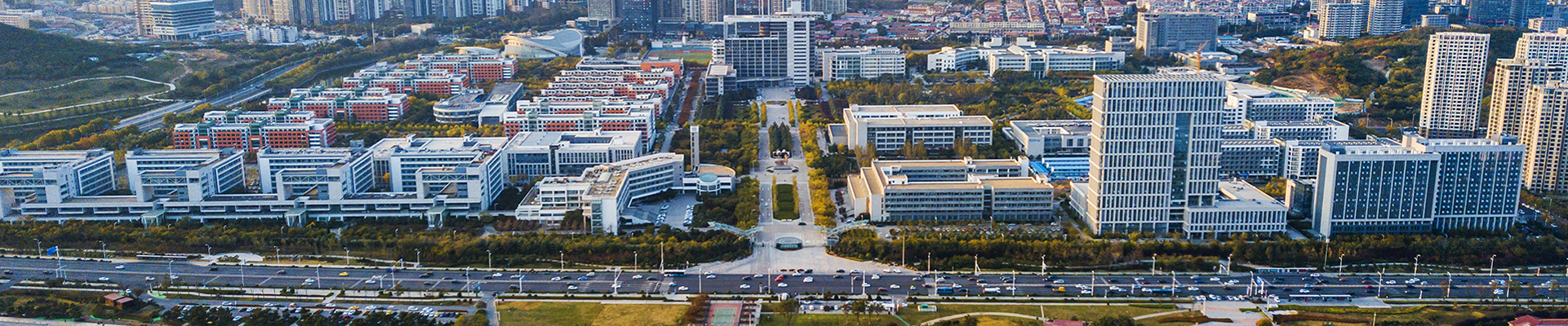
The MPAcc program at China University of Petroleum (East China) was approved in 2010 and began enrollment in 2011. It successfully passed the Ministry of Education’s national evaluation in 2015.
With a mission to cultivate high-caliber accounting professionals who are both principled and innovative, the program leverages high-quality resources both within and outside the university to offer a distinctive education that serves the needs of China’s energy economy and regional development. It leads in areas such as budgeting, cost control, and internal auditing in energy enterprises.
The program is part of the national pilot initiative for comprehensive reform in accounting graduate education and hosts both the National MPAcc Practice Education Demonstration Base and the Shandong Province MPAcc Internship Base. Supported by comprehensive training systems and facilities, the program emphasizes practice-based and case-based teaching and integrates on-campus and off-campus experiential learning to form a distinctive talent training and quality assurance system.
This program aims to cultivate well-rounded professionals with moral integrity, legal awareness, and strong theoretical and practical foundations in economics and accounting. Graduates will:
§Master advanced knowledge in accounting, finance, and auditing;
§Be equipped with strategic thinking and global perspectives;
§Be able to independently solve real-world problems in accounting, financial analysis, taxation, internal control, asset management, and digitalized and intelligent accounting systems;
§Possess critical and innovative thinking abilities;
§Be prepared for accounting roles across enterprises and public institutions both in China and internationally.
No. | Specialization | Description |
1 | Financial Accounting and Auditing | Focuses on the production and disclosure of accounting information in enterprises and public institutions. Topics include accounting standards, practical applications, policies, and ethics. Key research areas include corporate financial accounting, government accounting, tax accounting, environmental accounting, corporate social responsibility, auditing, and internal control. |
2 | Capital Markets and Corporate Finance | Centers on the flow and management of financial resources in enterprises and public entities. Topics include corporate governance, investment and financing, tax planning, financial innovation, mergers and acquisitions, and shared financial services. |
3 | Management Accounting and Intelligent Accounting | Emphasizes the integration and optimization of resources in value creation systems. Research areas include strategic decision-making, budgeting, cost accounting and control, performance evaluation, accounting digitalization, and intelligent financial decision-making based on data mining. |
The program is delivered in a full-time format and follows a four-stage progressive model consisting of coursework, on-campus training, professional internship, and thesis writing. The professional internship component must last no less than six months in total.
§Standard duration: 3 years
§Maximum duration: 5 years

Address: No.66, West Changjiang Road, Huangdao District, Qingdao, China, 266580
Tel:0532-86981324
Copyright © 2021 China University of Petroleum