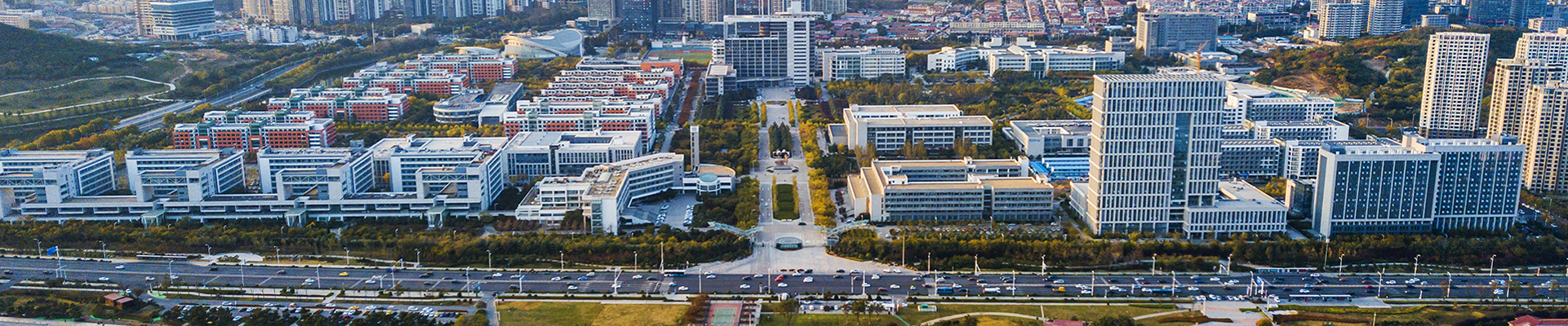
The Master of Finance (MF) program at China University of Petroleum (East China) was approved by the Academic Degrees Committee of the State Council in June 2014 and began admitting students in 2016. Since its inception, the program has received strong support from the university in terms of funding, faculty resources, and policy. Enrollment has steadily expanded.
Built upon the university’s disciplinary strengths in oil and gas energy, this program strictly adheres to the national standards set by the National Steering Committee for Finance Professional Degree Graduate Education. The program focuses on the field of energy finance, while also addressing the needs of various financial institutions, markets, and related enterprises. It is dedicated to cultivating applied finance professionals, including energy finance managers, financial analysts, risk (wealth) managers, and capital market practitioners. The program is designed to serve the national energy strategy and regional economic development, fulfilling the mission of delivering industry-oriented, energy-featured financial talent.
The MF program aims to meet the talent demands of a modern market economy by producing high-level, application-oriented financial professionals who:
§ Possess sound political awareness, strong social responsibility, and professional ethics;
§ Have a solid theoretical foundation in economics and finance;
§ Master skills in investment and financing management, financial trading, product design and pricing, financial analysis, and risk management;
§ Are able to apply financial theories and quantitative tools to solve practical problems;
§ Are well-versed in international financial norms and regulatory frameworks;
§ Exhibit innovation, adaptability, and strong applied capabilities in the financial sector.
No. | Specialization | Description |
1 | Energy Finance | This direction focuses on national energy strategies and energy finance policies. It explores the interconnection between the energy and financial sectors, covering topics such as energy pricing, energy finance security, and energy-related financial risks. Students will gain the ability to analyze and address issues related to industry-finance integration and the development of energy financial markets. |
2 | Wealth Management | This area equips students with essential knowledge and global best practices in wealth management. It covers financial regulations, market trends, and investment advisory techniques. The goal is to cultivate versatile professionals who can address practical problems in wealth and asset management with a deep understanding of financial systems and client needs. |
3 | Financial Markets | This track focuses on the structure and operations of sub-markets within the financial system. It covers the management practices of various financial institutions and the use of financial instruments for trading. Students will learn how to apply theories and policies to real-world financial challenges and gain the ability to navigate global markets with a strategic and analytical mindset. |
The program is delivered in a full-time format and follows a four-stage progressive model consisting of coursework, on-campus training, professional internship, and thesis writing. The professional internship component must last no less than six months in total.
§ Standard duration: 3 years
§ Maximum duration: 5 years

Address: No.66, West Changjiang Road, Huangdao District, Qingdao, China, 266580
Tel:0532-86981324
Copyright © 2021 China University of Petroleum