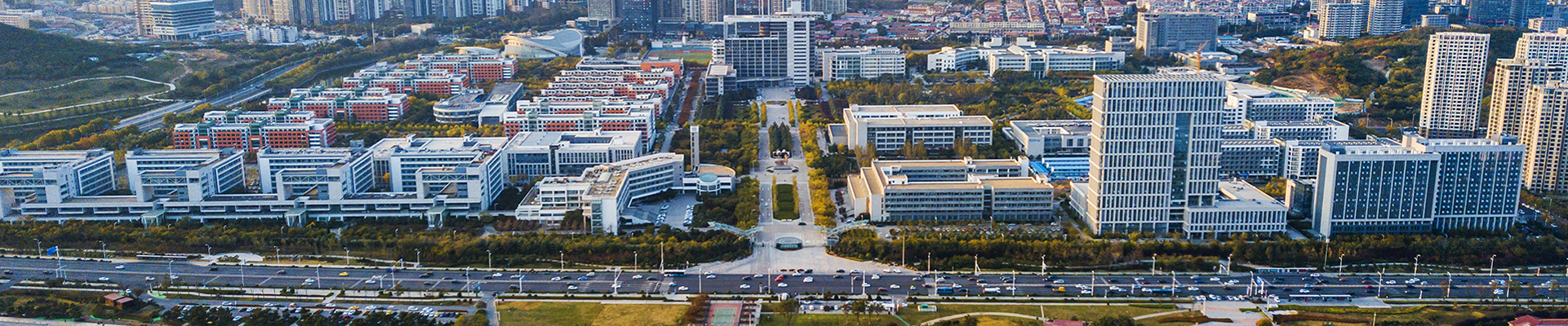
The MBA program at China University of Petroleum (East China) was authorized in 2009 and officially began enrolling students in 2010. It successfully passed the Ministry of Education’s national MBA program assessment in 2015.
Guided by the vision of “becoming a leading MBA program in the energy sector and regional development,” and the mission of “building a development platform to cultivate managerial elites,” the program has adhered to an integrated development strategy focused on quality, brand, and distinctiveness. Continuous investment has been made in infrastructure, curriculum reform, enterprise-based experiential platforms, student community development, and alumni culture building. These efforts have earned the program a strong reputation and contributed to the cultivation of a large number of high-level management professionals for both the energy sector and regional socio-economic development.
In alignment with China’s national energy strategy and the high-quality development goals of the Yellow River Basin, as well as the broader needs of regional development in Shandong Province, this program aims to produce advanced management professionals who:
§ Possess a global perspective and a strong sense of social responsibility;
§ Master fundamental theories in economics and management;
§ Are equipped with systematic knowledge in modern enterprise management;
§ Demonstrate excellent leadership, innovation, and managerial capabilities;
§ Are prepared to assume mid-to-senior level management positions in energy enterprises and regional organizations.
No. | Specialization | Description |
1 | Strategy and Marketing Management | This specialization addresses real-world strategic and marketing issues in enterprises. It focuses on advanced theories, tools, and methods in strategic and marketing management. Students will be trained to handle tasks such as strategic analysis, formulation, implementation, and evaluation; market research; brand management; customer relationship management; and e-commerce system design and operations. Special emphasis is placed on social responsibility and sustainable development, particularly in environmentally sensitive industries. |
2 | Operations Management | This track emphasizes understanding the components of supply chains, including logistics, information flow, and capital flow. Students will master theories and tools to analyze, design, and implement operations and supply chain systems. Graduates are prepared for roles in procurement, e-commerce operations, production planning, supply chain finance, quality management, logistics, and risk control. |
3 | Corporate Finance and Accounting | Focused on the digital transformation of finance and accounting in the era of “Big Data, AI, Cloud, and IoT,” this specialization covers financial decision-making, budgeting, cost control, and tax planning. Students will gain the ability to apply financial and accounting thinking in integration with business operations and IT systems. The track is tailored to meet the needs of energy enterprises and regional economies, producing high-quality, transformation-ready finance professionals. |
4 | Human Resource Management | This specialization emphasizes strategic human resource planning and implementation. Students will be trained in recruitment, training, performance evaluation, incentives, and labor relations. Graduates are equipped for mid-to-senior HR roles and cross-functional managerial coordination. |
5 | Project Management | This area focuses on the management of unique, one-time projects. It integrates knowledge from management science, systems science, behavioral science, and engineering, along with data science and information technology. Students will learn to plan, evaluate, and control project scope, schedule, cost, quality, and risks, enabling them to independently manage all phases of complex projects. |
The MBA program is delivered in a part-time format. Students complete coursework and mandatory academic components while continuing to work. Under the supervision of graduate advisors, students engage in professional practice and thesis writing.
The program adopts a dual-mentor system, in which experienced industry experts with strong backgrounds in engineering and management are invited to join faculty advisors as members of the mentoring team. These mentors participate in guiding practical training, coursework, and thesis supervision. The primary supervisor is a faculty member of the university.
§ Standard duration: 3 years
§ Maximum duration: 5 years
§ Minimum cumulative on-campus study time: 12 months
Website: www.mba.upc.edu.cn

Address: No.66, West Changjiang Road, Huangdao District, Qingdao, China, 266580
Tel:0532-86981324
Copyright © 2021 China University of Petroleum