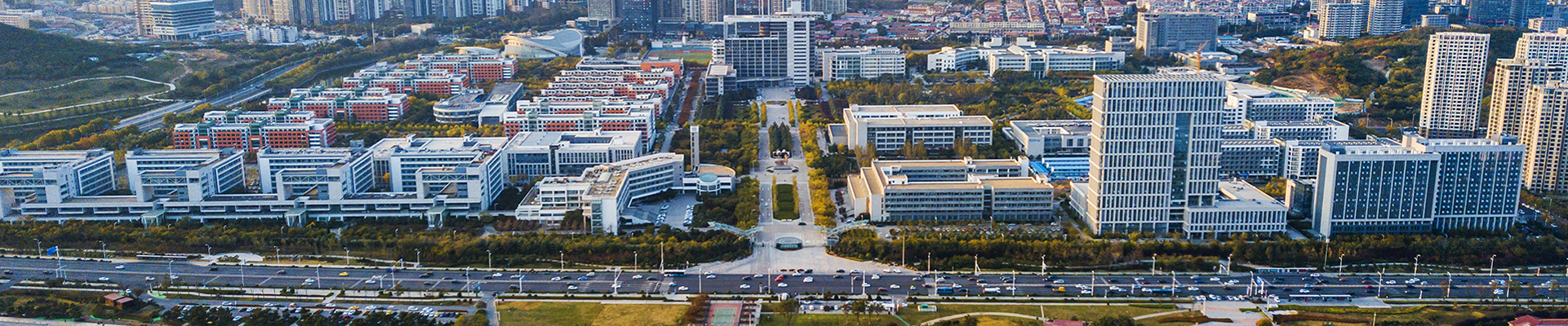
On November 30, 2025, the 7th Forum on Frontier Modeling for Energy and Environment, together with the 1st Symposium on Low-Carbon Intelligent Governance, was successfully held at our University. Centered on energy and environmental modeling and analysis as well as low-carbon intelligent governance, the event brought together leading scholars from a range of institutions, including Renmin University of China, Tongji University, Beijing Normal University, Beijing Institute of Technology, Hefei University of Technology, Central China Normal University, National Taiwan University, and the University of Surrey (UK). Participants engaged in in-depth discussions on frontier topics such as data envelopment analysis (DEA) in big-data environments, carbon mitigation strategies and pathways toward low-carbon development, and carbon market mechanisms and corporate green transformation—highlighting the event’s strong interdisciplinary character.
Hosted by China University of Petroleum (East China), the forum was co-organized by the School and the Institute of Energy Economics and Policy. The opening ceremony was chaired by the School’s Deputy Dean (in charge of administrative affairs), Professor Jian Ling. Vice President Professor Peng Zhou attended and delivered welcome remarks, noting that the forum provided a high-level platform for scholarly exchange and collaboration in frontier modeling for energy and the environment. He emphasized that, under China’s “dual-carbon” goals, advancing research on energy and environmental modeling and fostering innovation in low-carbon intelligent governance are of great significance.
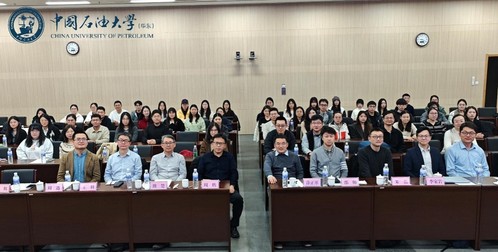
The forum further strengthened interdisciplinary and inter-university dialogue and collaboration in energy, environmental economics, and management. While broadening the academic horizons of faculty and students, it also offered valuable scholarly insights and practical implications for advancing green and low-carbon development.