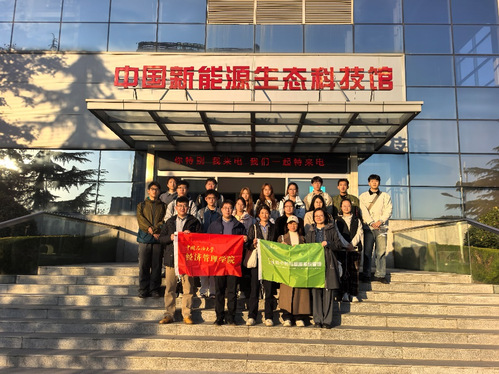
On November 20, Bai Yang, Deputy Dean of the School, led a delegation of 20 core faculty members from the Carbon Neutrality and Energy Systems Management micro-credential program to TGOOD New Energy Co., Ltd. The group visited the company’s advanced net-zero carbon building and the New Energy Ecology Science and Technology Museum.
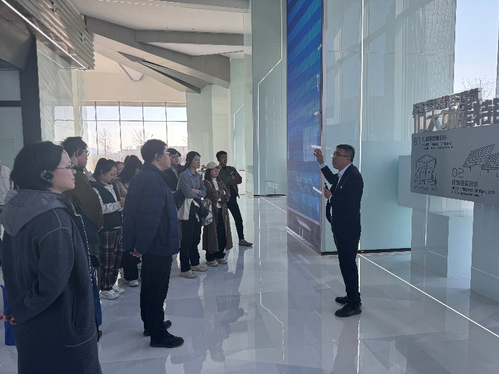
During the visit, the delegation examined key application scenarios, including energy-saving technologies used in net-zero buildings, the layout of electric-vehicle charging networks, and green energy circulation systems within the industrial park. The team also learned about TGOOD’s practical experience in decarbonization pathway planning and the operation of net-zero projects. The visit helped students better understand real industry needs and further strengthened industry–education integration through expanded school–enterprise collaboration in talent development.
Launched in 2021, the Carbon Neutrality and Energy Systems Management micro-credential program serves as an innovative platform for cultivating interdisciplinary and practice-oriented talent. Guided by real-world demands and a strong focus on innovation and practical competencies, the program leverages the University’s strengths in energy-related disciplines to break traditional academic boundaries. Anchored in complex, authentic problems, it reconstructs the curriculum through project-based learning, turning interdisciplinary knowledge—such as carbon accounting, carbon trading, and energy systems optimization—into integrated capabilities for solving real challenges. Signature courses, including Comprehensive Practice in Low-Carbon Development and Carbon Neutrality Action Plan Design, enable students to sharpen professional skills through hands-on learning, enhancing employability and industry fit.
Qingdao TGOOD New Energy Technology Co., Ltd. was established on June 11, 2019. In August 2025, the company put into operation the world’s first ultra-advanced net-zero carbon building, featuring coordinated energy supply from photovoltaic power generation, second-life battery energy storage, and vehicle-to-grid discharging. The company’s innovations—such as group-intelligent charging technology and AI-enabled charging modules—have become key highlights of its technology portfolio. The company was also selected for the Ministry of Commerce’s 2025 National Technical Trade Innovation Practice Cases.