To deepen the connotation of the “all-round education” initiative and explore effective pathways for building an integrated education community, the School organized a delegation of teaching and student-affairs staff to conduct a thematic study visit in Xi’an from October 28 to 29. Focusing on the goal of strengthening educational foundations and enhancing the effectiveness of talent development, the delegation held in-depth exchanges with peers at Northwest A&F University and Xidian University around five core areas, including undergraduate teaching, top-tier talent cultivation, and postgraduate recommendation mechanisms.
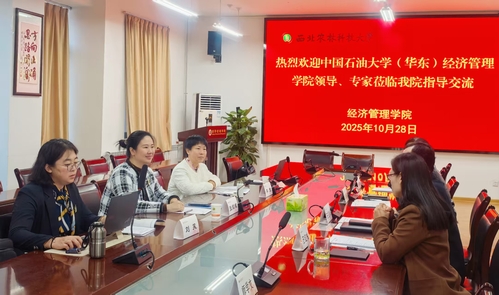
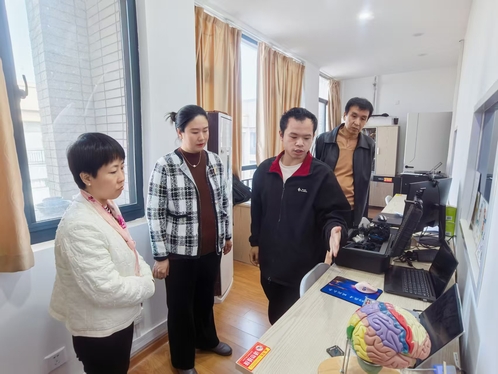
At the College of Economics and Management of Northwest A&F University, Dean Shi Baofeng provided a comprehensive overview of the School’s development. Deputy Dean Wang Hongmei shared practical experience in improving undergraduate teaching quality, building first-class majors, and developing laboratory facilities. She elaborated on the design of curriculum systems, mentorship arrangements, and training outcomes for top-tier talent programs such as the Elite Economics Class and the Excellence Program in Agricultural Economics and Management. The two sides also exchanged on modular curriculum construction, the integrated development of on- and off-campus practice bases, and the establishment of practice-teaching evaluation systems. Regarding postgraduate recommendation (push-exam exemption), discussions covered quota allocation, comprehensive capability assessment standards, and process optimization—providing valuable insights for enhancing our own procedures.
At Xidian University’s School of Economics and Management, Deputy Dean Xie Yongping introduced the School’s distinctive approaches to undergraduate program development, integration of laboratory resources, and international joint-education programs. He emphasized the practice-teaching model of “learning through competition and capability enhancement through training.” Counselor Qu Jianjing explained the university’s mature mechanisms for targeted talent recruitment, employment market expansion, and career guidance for graduates. The two sides held focused discussions on the operation model, credit recognition mechanisms, and international talent-training pathways for the “3+1” China-U.S. joint degree program, which offered new perspectives for the School’s internationalization efforts.
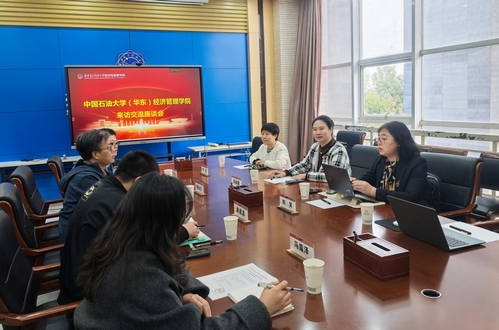
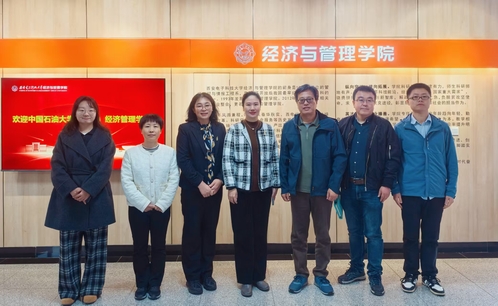
These visits aligned closely with the School’s development needs and enabled the delegation to learn extensively from leading practices in undergraduate teaching, top-tier talent cultivation, postgraduate recommendation, admissions, and career development. The visit broadened perspectives and clarified future directions for improvement. Moving forward, the School will systematically review and transform the findings into actionable measures, further deepen educational reform, refine the talent-training system, and continuously enhance the precision and effectiveness of student development.