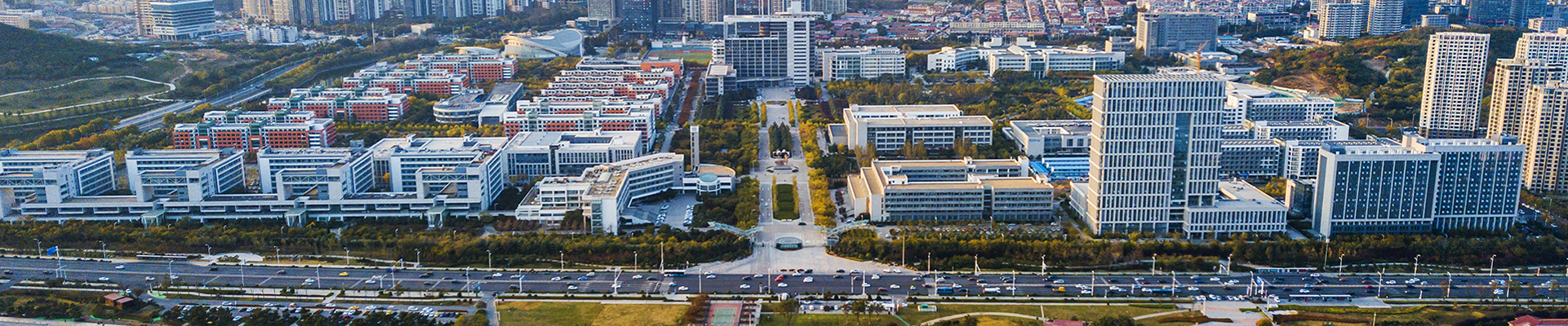
To advance the School’s “Energy+,” “Digital Intelligence+,” and “Management+” strategies, support continuous improvement under BGA accreditation, and promote the high-quality development of the MBA program, the School held the MBA Curriculum Development Seminar on November 3 as part of its “Education Quality Enhancement Initiative.” The seminar was chaired by Deputy Dean (Acting Dean) Jian Ling and attended by Party Secretary Zhu Hua, MBA course leaders, as well as staff from the accreditation office and the MBA Center.
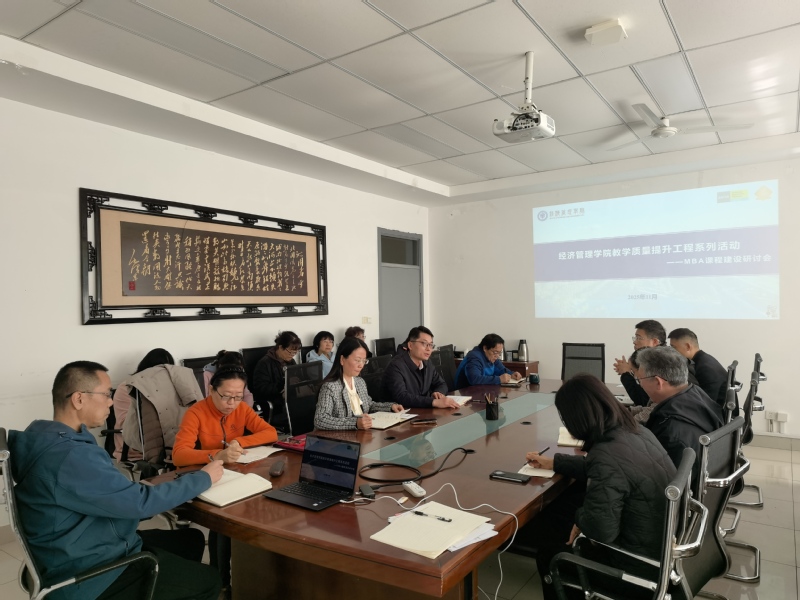
At the beginning of the session, Zhu Hua announced the appointment of Professor Zheng Haidong as Academic Director of the MBA program and Associate Professor Zhang Yin as Associate Academic Director. She noted that the seminar marked the official launch of the School’s “Education Quality Enhancement Initiative.” Zhu emphasized the need to fully integrate the concepts of “Green, Responsible, and Sustainable (GRS)” development into the curriculum—not only to meet BGA standards and strengthen MBA program construction, but also to drive the School’s disciplinary advancement and support the implementation of its “Energy+,” “Digital Intelligence+,” and “Management+” strategies.
She stressed that the School must build a distinct, data-enabled, and integrated MBA program that leverages high-quality resources, enhances international visibility, and forms scalable models to inspire curricular upgrading and innovation across full-time programs, ultimately shaping a new paradigm that features disciplinary integration, research–teaching alignment, and industry–education collaboration.
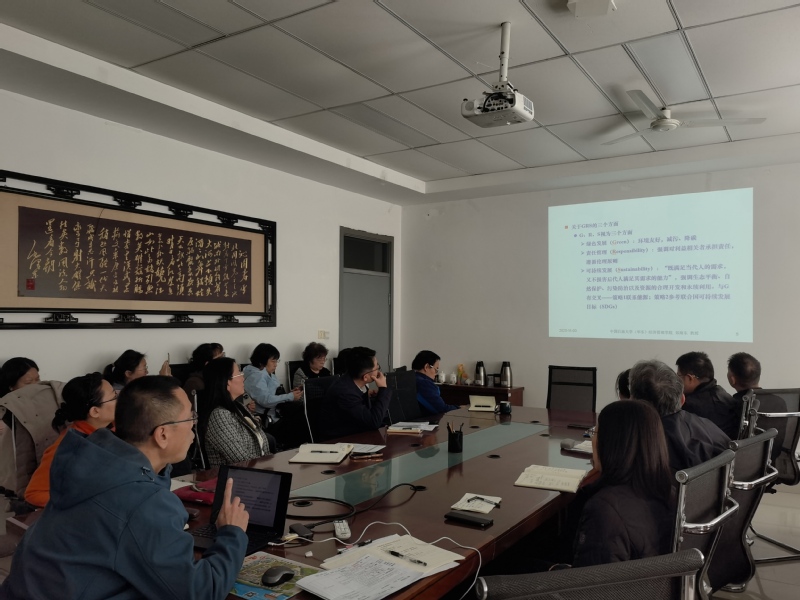
Professor Zheng Haidong delivered a thematic presentation on “Integrating Green, Responsible, and Sustainable Principles into the MBA Curriculum.” He elaborated on the definitions and implications of G, R, and S, and explained approaches for embedding these principles into course content and teaching design. He then led a discussion on MBA curriculum development aligned with BGA standards, during which course teams engaged in in-depth exchanges on defining GRS concepts, selecting suitable cases, and refining curricular frameworks.
During the discussion, Jian Ling noted that in a rapidly evolving era shaped by AI technologies and transformative business models, MBA programs face heightened expectations in terms of humanistic values and ethical leadership. As MBA education stands at a critical turning point, the School must build an innovative program management team capable of understanding market needs, leveraging institutional strengths, developing distinctive program features, cultivating industry partnerships, diversifying teaching formats, and continuously innovating talent development models.
He highlighted that the appointment of the MBA Academic Director and Associate Director follows the recommendations of international accreditation experts and reflects the School’s commitment to strengthening academic leadership and enhancing disciplinary and curricular development. Moving forward, synergy between the program management team and the teaching team will be essential to elevating the MBA program’s brand and influence.
The seminar aimed to align MBA curriculum development with international accreditation standards and embed GRS principles into course design. Building on this foundation, the School will continue to enhance the academic substance of its programs and develop a talent cultivation model characterized by strong management foundations, distinct energy-sector strengths, and digital-intelligence excellence—cultivating high-quality, interdisciplinary management professionals to support China’s national energy strategy and socioeconomic development.