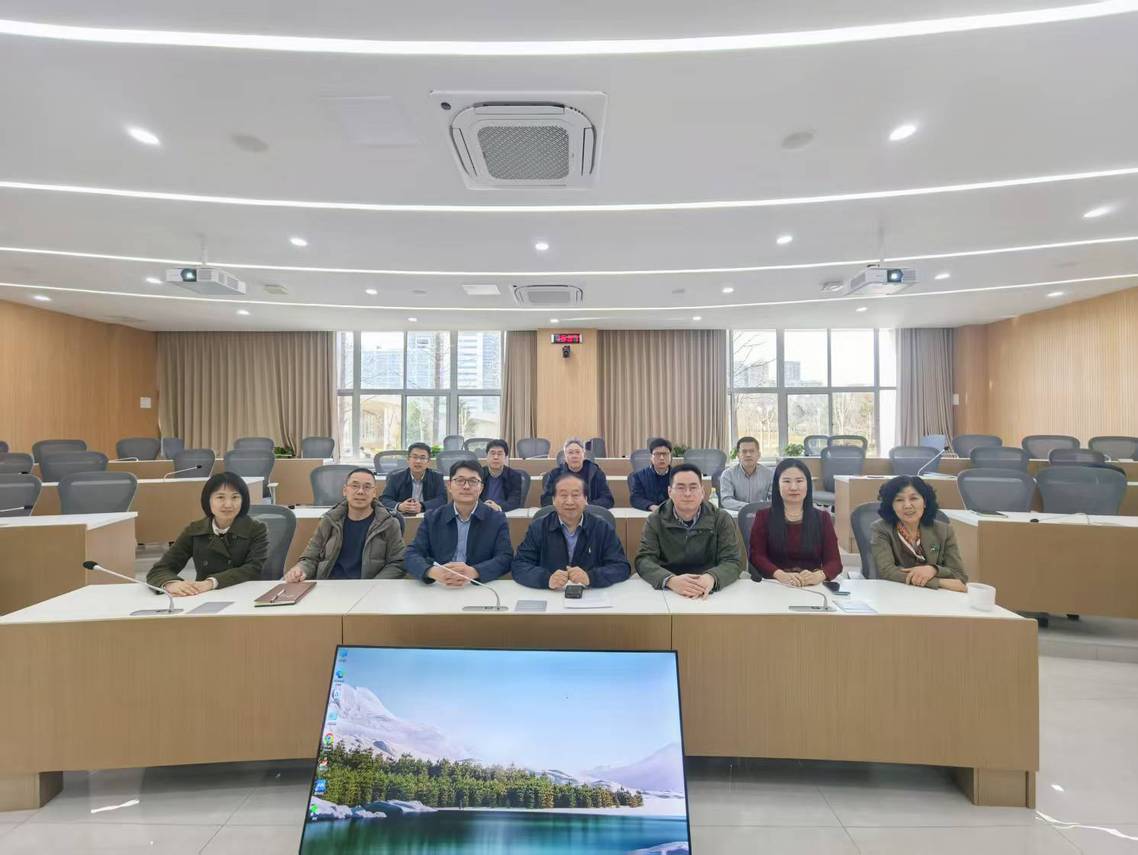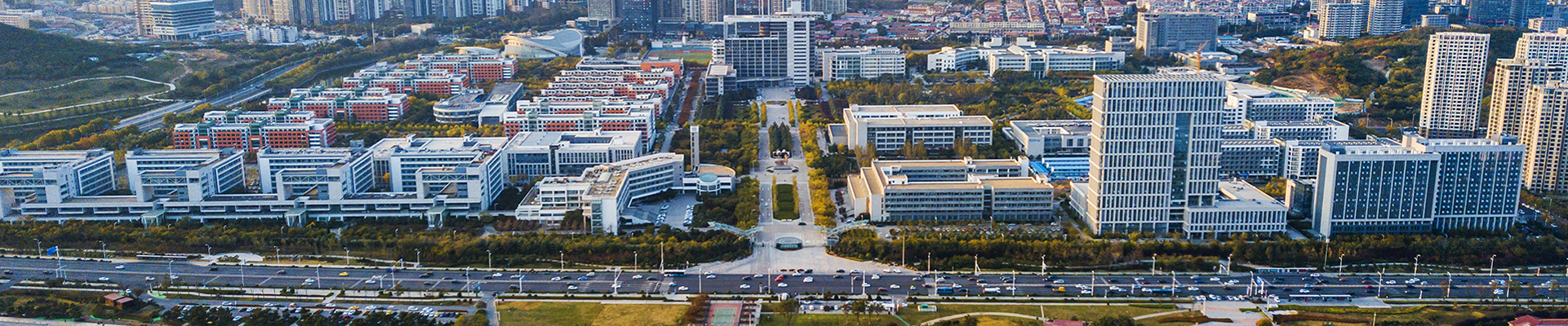
Recently, Professor Wang Zhongming, Senior Liberal Arts Professor at Zhejiang University, was invited to deliver a special lecture titled “New Strategies for High-Quality Internationalization: Continuous Improvement and Pursuit of Excellence.” In his lecture, Professor Wang systematically introduced innovative pathways for advancing the internationalization of business education and building sustainable impact. The lecture drew strong interest from faculty and students across the college and provided forward-looking insights and practical guidance for the transformation and upgrading of the School’s business education strategy.
Three-Step Strategy for High-Quality Internationalisation
Centered on his strategic framework of the “Three-Step Approach to High-Quality Internationalization,” Professor Wang outlined a progressive model for global talent cultivation in business schools. He proposed moving beyond traditional one-way internationalization by establishing a globally collaborative model based on “multi-university joint training.” This approach advocates for a flexible, cross-national system that enables joint curriculum delivery and deeper global academic partnerships. Through case studies on faculty exchanges, co-teaching arrangements, and student mobility programs, Professor Wang illustrated how to cultivate “resilient talent”—graduates with both global perspectives and strong local adaptability.
Drawing on the experience of building the “Belt and Road Growth Alliance” and the “International Silk Road Entrepreneurship Education Alliance,” he shared strategies for strengthening cross-cultural compliance management and value ethics research. These efforts aim to develop “Belt and Road-oriented talent”—individuals who are proficient in international rules and capable of practicing culturally sustainable leadership in global development contexts.
Integrating AI and Green Innovation into Business Education
In response to the accelerating wave of digital and intelligent transformation, Professor Wang emphasized the importance of AI leadership as a critical entry point, and advocated for embedding responsible management and green sustainability principles throughout the business education curriculum. He introduced experiential platforms such as the 'AI Empowerment Case Competition' and 'Green Business Case Competition'. These initiatives aim to nurture a new generation of “AI Green Innovation Talent”—students equipped with both technological acumen and a strong sense of social responsibility.
The Five Forces Management Empowerment Strategy
During the session, Professor Wang also elaborated on the “Five Forces Management Empowerment Strategy,” which integrates five key dimensions of ecological force, innovation force, team force, cultural ofrce, and action force. These dimensions align with five strategic management pillars—sustainable, responsible, team, innovation, and change management, forming a closed-loop empowerment mechanism 'Innovation Management → Team Collaboration → Responsibility-Driven Action → Resilience Empowerment → Change Leadership'.
Prof. Wang stressed that sustainable management must remain at the core of the strategy, emphasizing the use of regulatory thinking to refine institutional systems and ethical leadership to reinforce value orientation. The ultimate goal is to enhance organizational resilience while fulfilling social responsibilities.
Driving Global Impact with CIM and Responsible Sustainability Empowerment
Professor Wang also highlighted Continuous Impact Management (CIM) as the central concept for transforming business education. He encouraged faculty and students to actively participate in international conferences, engage with global academic networks, and align their work with international frontiers. He further called on the School to adopt “responsible sustainability empowerment” as its guiding philosophy, strengthen the integration of academia, industry, and research, and use practice-driven platforms like the Green Innovation AI Competition to ensure the alignment of business education with pressing societal needs. He also emphasized the importance of leveraging platforms such as the International Silk Road Entrepreneurship Education Alliance to expand cooperation with countries along the Belt and Road, thereby contributing Chinese wisdom and solutions to global sustainable development.
Strategic Recommendations for BGA Reaccreditation
At the conclusion of the lecture, Professor Wang provided targeted guidance for the School’s BGA reaccreditation process, identifying three key focus areas for the next stage:
(1) Take the construction of model courses as the core: extend the successful experience of the “model courses for model majors” to all majors in the college, optimize the design of the courses by combining the “Five Forces Management Empowerment Strategy”, and strengthen the in-depth integration of digital intelligence and green sustainable content.
(2) Strengthening practice and international benchmarking: Through practice programs such as the “AI Empowerment Case Competition” and “Green Business Case Competition”, students' technological application ability and cross-cultural leadership will be enhanced to ensure that the re-accreditation work is strictly in line with international first-class standards.
(3) Build a dynamic assessment mechanism: establish a dynamic assessment system with academic effectiveness, alumni achievement and social contribution as indicators to continuously track the effectiveness of discipline construction and lay a solid foundation for the college to enhance its global influence.
Looking Ahead: Advancing Global Vision and Sustainable Development
This lecture and the subsequent work plan provide clear guidance for the college's internationalization strategy and discipline construction. The college will take the BGA recertification work as the core driver to comprehensively optimize the curriculum system and talent cultivation mechanism, and promote the deep integration of the “three-step strategy” and the “CIM continuous influence” goal. In the future, the college will combine BGA certification standards to focus on developing internationally competitive model courses, strengthen the implementation of digital intelligence transformation and green sustainable concepts in teaching practices, and continuously improve academic performance and social contribution levels through a dynamic assessment mechanism. In addition, the college will further deepen its international cooperation network, improve the industry-academia-research collaborative innovation ecosystem, and demonstrate new responsibilities and achieve new breakthroughs in serving national strategic needs and global sustainable development.